
Lake Mead Nears Historic Lows as Drought and Shrinking Snowpack Strain the Colorado River Basin
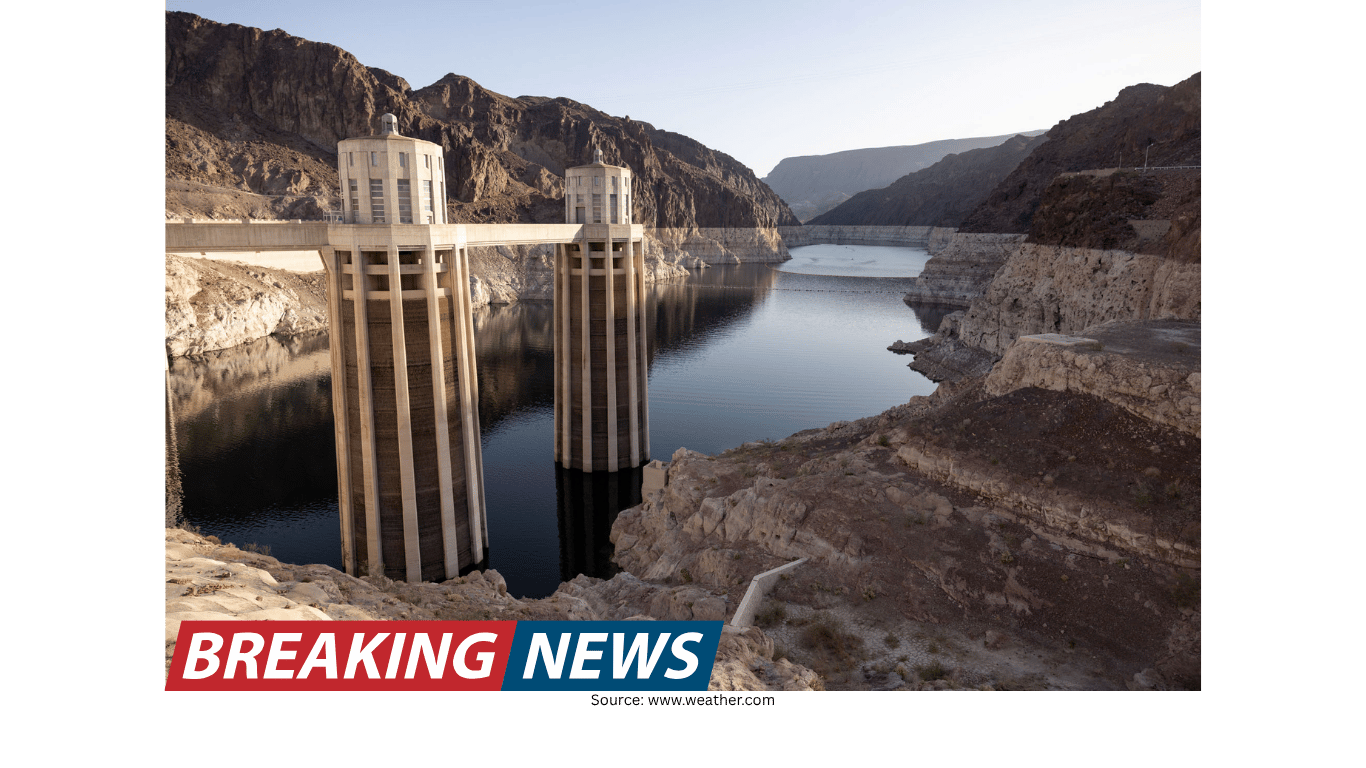
Lake Mead’s water level is falling again—and nearing a record
Lake Mead, the country’s largest reservoir, sits on the Nevada–Arizona border and plays an outsized role in the daily life of the American West. It supplies drinking water to millions and is intertwined with power generation, tourism and recreation. Now, the reservoir is once again approaching a historic threshold: it is within about 20 feet of breaking its all-time low water level, set in 2022.
The numbers illustrate how narrow the margin has become. Lake Mead is currently nearly 175 feet below its maximum capacity, and the downward movement has continued into the year. Since March 1, the lake’s level has fallen by about 8 inches—an incremental drop that matters when the reservoir is already hovering near the bottom of its modern record.
Lake Mead was created after the Hoover Dam was built on the Colorado River in 1935. Since then, federal recordkeeping has tracked the reservoir in two key ways: water storage (measured by volume in acre-feet) and water level (measured by elevation in feet). Both measures show a pronounced long-term decline since 2000, underscoring that the current moment is not just a single-season problem but part of a longer trajectory.
What the long-term record shows
Historical measurements help place today’s conditions in context. In terms of volume, Lake Mead last reached 15 million acre-feet in 2006. It last reached 20 million acre-feet in 2001. In the 1940s, it rose to nearly 30 million acre-feet. Today, it stands at about 8.3 million acre-feet, a stark contrast with mid-20th-century highs.
Water-level records tell a similarly sobering story. Since July 2000, Lake Mead’s elevation has not exceeded 1,200 feet, which had been an approximate peak in the decades prior. The current level is about 1,058 feet. That is the lowest since 2022, when the reservoir reached 1,041 feet—its all-time low.
Before the 2022 record, the only lower levels in the record occurred in the 1930s, during the Dust Bowl era. The comparison is uncomfortable for a reason: it links today’s water stress with one of the most infamous drought periods in U.S. history, even though the modern West’s water demands and infrastructure are vastly different.
Why Lake Mead matters beyond its shoreline
Lake Mead is not just a measurement on a chart. It is a critical piece of the Colorado River system and a major supplier of drinking water for the region. It is also a hub for recreation and tourism, which makes its decline visible not only in policy discussions but in everyday experiences—boat ramps, marinas and access points are all affected as shorelines recede.
The reservoir is also central to a larger network of water bodies in the Colorado River Basin. The basin feeds Lake Mead and also Lake Powell, meaning that the same upstream conditions influencing snow and runoff can reverberate across multiple reservoirs and communities.
Officials describe a “dire” water supply situation
Public agencies and water managers have been explicit about the seriousness of the current trajectory. In August 2025, a federal study was released “reaffirming impacts of unprecedented drought in the Colorado River Basin and pressing the need for robust and forward-thinking guidelines for the future.” The language reflects a growing emphasis not only on responding to present conditions but on designing operating rules that can withstand future extremes.
Local water managers are also watching the near-term outlook with concern. Bronson Mack, an outreach manager with the Southern Nevada Water Authority, said the lake is sitting at just under 35% capacity and could drop another 16 feet or more before the end of the year. That kind of decline would further tighten the buffer between current levels and the historic low.
Federal officials have framed the challenge in terms of both urgency and scale. The Bureau’s Acting Commissioner David Palumbo said the situation “underscores the importance of immediate action to secure the future of the Colorado River,” emphasizing the need for “new, sustainable operating guidelines” that are robust enough to withstand ongoing drought and poor runoff conditions. The stakes, he added, include water security for more than 40 million people who rely on the river system.
Exceptionally dry conditions since the 2000s
Conditions around Lake Mead have been shaped by a long stretch of dryness. The National Park Service has described the area as experiencing exceptionally dry conditions since the 2000s, “coupled with the ongoing effects of climate change, reduced snowpack and low runoff conditions.” While each year differs, the broader pattern has left less room for error: when a dry year arrives, it lands on top of already depleted storage.
In a reservoir system, that matters. Storage is the cushion that helps communities and ecosystems absorb variability. When levels are high, a dry season is painful but manageable. When levels are low, the same dry season can become a crisis.
The snowpack connection: how winter shapes summer water
To understand why Lake Mead is struggling, it helps to look far upstream and far earlier in the year—into winter snowpack at higher elevations. Jason Gerlich, a regional drought early warning system coordinator at NOAA’s National Integrated Drought Information System, has pointed to snow as a crucial component in maintaining water levels in the Colorado River Basin.
Snow acts like a natural reservoir. It accumulates at higher elevations and then melts gradually through warmer seasons, delivering water more steadily over time. That slow-release dynamic is important: it supports a consistent supply that can feed rivers and reservoirs beyond a single storm event.
One way to quantify snow’s contribution is through “snow water equivalent,” which captures how much liquid water is contained in the snowpack. Not all snow is equal. Light, fluffy snow contains less liquid water than thick, heavy snow, so two winters with similar snowfall totals can still yield different runoff outcomes.
Gerlich has described the broader shift in winter precipitation as a driver of cascading impacts. “More rain and less snow during the winter months has cascading impacts on our water availability for the Western United States,” he said, noting that the region relies on snowpack as its “largest non-man-made reservoir.”
Why this year looks different from recent patterns
While Lake Mead’s decline has been long-running, this year’s drought has been described as unusually extreme. Gerlich characterized it as a kind of outlier—“unprecedented and out of character” in terms of extremity compared to recent trends.
Several specific features stand out in his description. In some places, he said, there was less than 50% of the usual snow. The snowpack also peaked 30 to 40 days earlier than normal. That timing matters: an early peak can mean earlier melt, and earlier melt can reduce the ability of the landscape to deliver water slowly into late spring and summer.
Gerlich also pointed to warming arriving earlier in the year, and doing so more rapidly and suddenly than typical. “That’s impactful because those are usually times when we should be accumulating snow, and instead it’s melting off,” he said. In his assessment, “It truly does signal a dire water supply situation for most of the western United States.”
A preview of what long-term warming could mean
Even as he described the current year as anomalous, Gerlich also framed it as potentially instructive. He said there are “numerous dynamics at play” that made the year so unusual, but suggested it can serve as “a good worst-case-scenario example of what long-term warming could look like—in terms of less snow and more rain.”
That framing matters because it links immediate conditions to longer-term planning. If the region’s future includes more winters where precipitation falls as rain rather than snow, the West’s water system—built around the predictability of snowpack accumulation and melt—faces a fundamental challenge. The question becomes not only how to respond to a single bad year, but how to adapt to a pattern that could become more common.
Recreation and the regional economy at risk
Lake Mead’s low levels are also a tangible issue for the Lake Mead National Recreation Area, described as America’s first and largest national recreation area. The site is not only a natural and recreational asset; it is an economic one. The recreation area hosts approximately 8 million visitors annually, contributes $374 million to the regional economy and supports approximately 4,000 jobs.
Visitors come for water-based activities such as boating, swimming, sailing, kayaking and fishing. But these activities depend on access to water and functional infrastructure along the shoreline. As water levels dwindle, the recreation area’s role as a community asset becomes harder to sustain in the same way.
The risk is not abstract. When levels fall, the shoreline shifts, and the distance between facilities and the water can grow. That can complicate launching boats, reaching marinas, and maintaining safe, reliable recreational access. Over time, the experience of the place changes along with the waterline.
Key figures at a glance
Lake Mead is within about 20 feet of breaking its all-time low water level set in 2022.
The reservoir is nearly 175 feet below maximum capacity.
Since March 1, the lake’s level has fallen by about 8 inches.
Current storage is about 8.3 million acre-feet; it last reached 15 million in 2006 and 20 million in 2001.
Current elevation is about 1,058 feet; the record low in 2022 was 1,041 feet.
Lake Mead is described as sitting just under 35% capacity, with a potential drop of 16 feet or more before year’s end.
The Lake Mead National Recreation Area hosts about 8 million visitors annually, contributing $374 million to the regional economy and supporting about 4,000 jobs.
What comes next: guidelines, uncertainty, and the need for resilience
The immediate outlook for Lake Mead remains defined by decline, but the broader conversation is about what kind of management can hold up under stress. The 2025 federal study’s call for “robust and forward-thinking guidelines” reflects a recognition that the operating assumptions of the past may not match the conditions of the present.
In practical terms, the reservoir’s trajectory is shaped by a blend of hydrology and policy: how much water arrives from snowmelt and runoff, and how water is managed across a system that serves tens of millions of people. When runoff is poor and snowpack is diminished, the system has less flexibility—and the consequences show up quickly in reservoir levels.
For communities across the West, Lake Mead’s shrinking numbers are a warning signal with multiple meanings. They point to the immediate reality of drought and low runoff. They also point to the central role of snowpack in the region’s water security. And they point to the stakes: drinking water supplies, power, recreation, and the economic activity tied to a reservoir that has long been treated as a dependable cornerstone of the West.
As the lake edges closer to its record low, the situation is increasingly defined not by a single measurement but by a convergence of trends—long-term decline since 2000, exceptionally dry conditions, reduced snowpack, and the possibility that future winters may bring more rain and less snow. Together, those dynamics are reshaping what water reliability looks like in the Colorado River Basin.