
Storm Winds Send Metal Sheets Across Ho Chi Minh City Highway, Exposing High-Wind Dangers
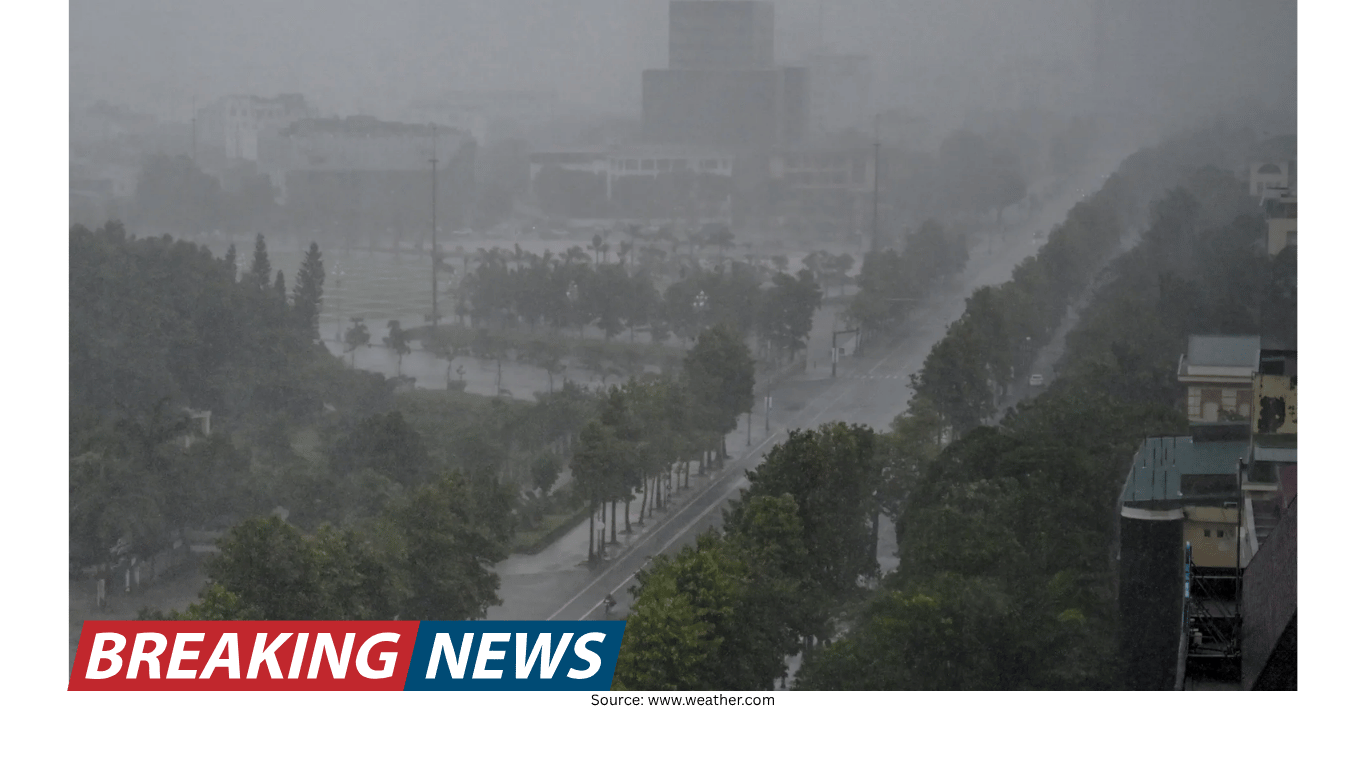
A highway drive turns into a debris field
A violent storm in Vietnam’s Ho Chi Minh City transformed a stretch of highway into a dangerous corridor when metal sheets were blown into traffic. In the middle of heavy rain and powerful storm winds, the sheets became fast-moving hazards, forcing drivers to react instantly to avoid collisions. The moment was frightening not because it involved an unusual type of weather, but because it showed how quickly common materials can become airborne and unpredictable when wind speeds surge during severe storms.
On a highway, where vehicles travel at speed and braking distances are limited, even a brief burst of wind-driven debris can create a chain of risks. Drivers may swerve to avoid objects, brake suddenly, or lose visibility in heavy rain. In this case, the metal sheets themselves were the immediate threat—hard, sharp, and capable of damaging vehicles or causing crashes. The scene illustrates a core reality of severe weather: hazards are not limited to the storm’s rain and wind alone, but also include what the wind can pick up and throw.
What made the situation so dangerous
The incident unfolded under a combination of powerful storm winds and heavy rain. That pairing matters. Strong winds can lift and propel objects, while heavy rain can reduce visibility and make road surfaces slick, limiting a driver’s ability to respond. When these factors overlap, the margin for error shrinks quickly. A driver who sees debris late—because rain blurs the view or spray from other vehicles obscures the road—may have only seconds to decide whether to brake, steer around it, or hold course.
Metal sheets are particularly hazardous because they can move in erratic ways. Unlike heavier debris that may slide along the ground, thin sheets can catch gusts, flip, and change direction. On a busy highway, that unpredictability can turn a single object into a moving obstacle that affects multiple lanes. The event in Ho Chi Minh City highlights how wind hazards can become life-threatening even without a direct strike from lightning or flooding water.
High winds: a severe-storm threat that can be overlooked
Severe storms are often associated in the public mind with dramatic rainfall, flooding, or thunder. Yet high wind hazards can be just as dangerous, particularly in urban environments where loose materials, construction elements, and roadside items can be dislodged. The Ho Chi Minh City storm serves as a vivid example: the wind did not merely buffet vehicles; it introduced external hazards into the roadway by lifting and moving metal sheets.
High winds can pose threats in several ways at once. They can destabilize vehicles—especially larger ones—push cars across lanes, and increase driver fatigue as people grip the wheel more tightly to maintain control. At the same time, wind can turn ordinary objects into projectiles. The result is a complex driving environment where the road is not just wet, but actively changing as debris moves.
Drivers “scrambled” as conditions changed in seconds
As metal sheets flew across the highway, drivers scrambled to avoid the debris. That phrase captures the reality of sudden severe-weather hazards: people often have to make split-second decisions with incomplete information. A driver may not know whether a piece of debris will slide, bounce, or lift again. They may also have to consider surrounding traffic—other vehicles braking or swerving at the same time—while rain and wind degrade visibility and traction.
In these moments, the danger is not only the debris itself but the collective reaction of traffic. Sudden maneuvers can trigger secondary crashes, particularly on highways where vehicles follow closely. The storm in Ho Chi Minh City demonstrates how quickly a roadway can become a danger zone when wind-driven debris enters the scene.
Why wind-driven debris is so hard to manage
Wind-driven debris is difficult to predict and difficult to avoid. Unlike standing water, which may be visible as a continuous hazard, debris can appear suddenly and move unpredictably. A driver might pass one piece of debris safely only to encounter another moments later. Additionally, wind gusts can vary rapidly in strength and direction during severe storms, changing how debris travels from one second to the next.
Heavy rain compounds the problem. Rain can mask the texture and contours of the road, making it harder to judge distance and speed. It can also create glare and reflections that reduce contrast, making debris harder to spot. When metal sheets are involved, their reflective surfaces may momentarily catch light or blend into the road depending on conditions, further complicating detection.
What this incident teaches about severe-storm risk
The frightening moment on the highway underscores a broader lesson: severe storms can create life-threatening risks beyond the most obvious impacts. Wind is not simply an uncomfortable part of bad weather; it can actively reshape the environment by moving objects into places they do not belong—such as a highway lane.
In practical terms, the Ho Chi Minh City incident illustrates how severe weather can turn routine travel into an emergency scenario. A driver may begin a trip expecting only rain, only to be confronted with debris moving across lanes. The transition from normal driving to crisis response can be instantaneous, leaving little time to adapt.
Key hazards highlighted by the Ho Chi Minh City storm
Powerful storm winds: Strong gusts can lift and propel objects, including metal sheets, into traffic.
Heavy rain: Rain can reduce visibility and traction, making it harder to see and avoid hazards.
Unpredictable debris movement: Thin, flat materials can flip and change direction as gusts shift.
Split-second driver decisions: Avoiding debris may require sudden braking or steering, increasing crash risk.
Life-threatening potential: High wind hazards during severe storms can escalate quickly, particularly on high-speed roads.
Forecasting accuracy and why it matters
Alongside the description of the storm’s impacts, the provided information includes a statement about forecasting performance: The Weather Channel is described as the world’s most accurate forecaster according to ForecastWatch, based on a Global and Regional Weather Forecast Accuracy Overview covering 2021–2024 and commissioned by The Weather Company. While this does not change what happened on the highway, it points to the broader role that forecasting and warnings play in helping people anticipate severe weather conditions.
Accurate forecasting can support better decisions—such as delaying travel, choosing alternate routes, or increasing caution when storms approach. Events like the one in Ho Chi Minh City show why timely awareness matters: when high winds are strong enough to move metal sheets, the risk environment on roads can change rapidly.
A reminder of how quickly “ordinary” materials become dangerous
Metal sheets are common in many settings, including areas where materials may be stored, used, or installed. In calm weather they are inert. In severe weather, they can become airborne hazards. The storm in Ho Chi Minh City demonstrates this transformation in stark terms: what appears to be a simple building material became a fast-moving threat once powerful winds and heavy rain took hold.
This is one of the defining features of high-wind events. The danger is not only the meteorological force itself, but the way that force interacts with the built environment. High winds can dislodge, lift, and carry objects into places where people do not expect them—like the middle of a highway.
What to take away from the incident
The violent storm in Ho Chi Minh City offers a clear, sobering takeaway: high winds during severe storms can create sudden, life-threatening hazards for drivers. The metal sheets flying across a highway were not just dramatic visuals; they were a practical demonstration of how quickly conditions can deteriorate and how limited a driver’s options can be when debris enters the roadway.
As severe weather unfolds, the combination of powerful winds and heavy rain can turn travel into a high-risk activity. The incident serves as a reminder that storm hazards are not confined to flooding or lightning; wind-driven debris can be just as dangerous, especially on fast-moving roads where reaction time is short and the consequences of a mistake can be severe.